top of page

NEWS &
RESOURCES
Photo credit: Ann Olsson
AGU 2025 x WFFRC
Join us at AGU's 2025 annual meeting from December 15 - 19, 2025 in New Orleans, Louisiana.
A total of 19 WFFRC research members will give 22 presentations and convened sessions.

Presenter | Presentation Titles | WFFRC Product |
|---|---|---|
Jennifer Balch | The Fastest-growing and Most Destructive Fires in the US (2001 to 2020) | x |
Claire Bekker | Comparing Air Quality Impacts of Land Management Scenarios to Mitigate Future Wildfire Activity in California | x |
Johan Eckdahl | Synergies of Climate and Wildfire in Forest Biogeochemical Cycling | x |
Xiulin Gao | Model Fuel Treatments: Convergent and Contrasting Effects of Prescribed Fire and Mechanical Thinning on Stand Structure, Fuel, and Demography Rates | |
Jazlynn Hall | Predicting forest burn risk from 2026 to 2040 in interior Alaska | x |
Winslow Hansen | Erasing the western US forest-fire deficit will require approximately 60 million hectares of ecologically beneficial burning over the next decade. | x |
Qian He | Interannual Variability of Aboveground Live Forest Biomass in Response to Fire Disturbances in the Western United States | x |
Nate Hofford | Spatial and temporal variation in Fire Radiative Power (FRP) across the Western United States | x |
Andy Hudak | Precision and accuracy of aboveground biomass density maps evaluated at six aggregation scales with utility to stakeholders | x |
Mitch Hung | Aridity reshapes the distribution of wildfire severity in Californian forests | x |
Christopher Kibler | Environmental drivers of forest resilience after Sierra Nevada wildfires
| x |
Christopher Kibler | Conservation Ecohydrology Poster | |
Alexandra Konings | Capturing the spatial variability of plant hydraulics at continental scale using differentiable modelling. (Invited) | |
Gavin Madakumbura | Assessing the Roles of Natural Variability and Anthropogenic Forcing in Wind-Driven Wildfires in Southern California (Invited) | x |
Miriam Marlier | Characterizing Wildland Fire Smoke: Estimating Exposure and Associated Impacts to Public Health II Oral | x |
Miriam Marlier | Compound Climate Hazards and Health Risks I Oral | |
Miriam Marlier | Compound Climate Hazards and Health Risks II Poster | |
Miriam Marlier | Assessing Compound Climate Exposures and Public Health Outcomes in California (Invited)
| |
Trent Robinett | A daily, long-term, microwave remote sensing-informed dataset of live fuel moisture content from machine learning | x |
Claire Schollaert | Leveraging forest and fire ecological modeling outputs to estimate emissions and air pollution impacts of wildland fires across the western U.S. | x |
Anna Trugman | Forests under pressure: resilience and vulnerability in a changing climate (Invited) | x |
Bowen Wang | What Drives Day-to-Day Changes in Evapotranspiration? Partitioning the relative importance of radiative, atmospheric, and surface conditions | |
Bowen Wang | What makes a good fire index? An evaluation of fire indices’ ability to represent daily risks of fire ignition and spread in the western United States
| x |
Park Williams | Attributing rapid increases in western US forest-fire activity and above-ground carbon losses to climate change and natural variability (Invited) | x |
Science Overviews.
Recent Publications.
Science Panel.
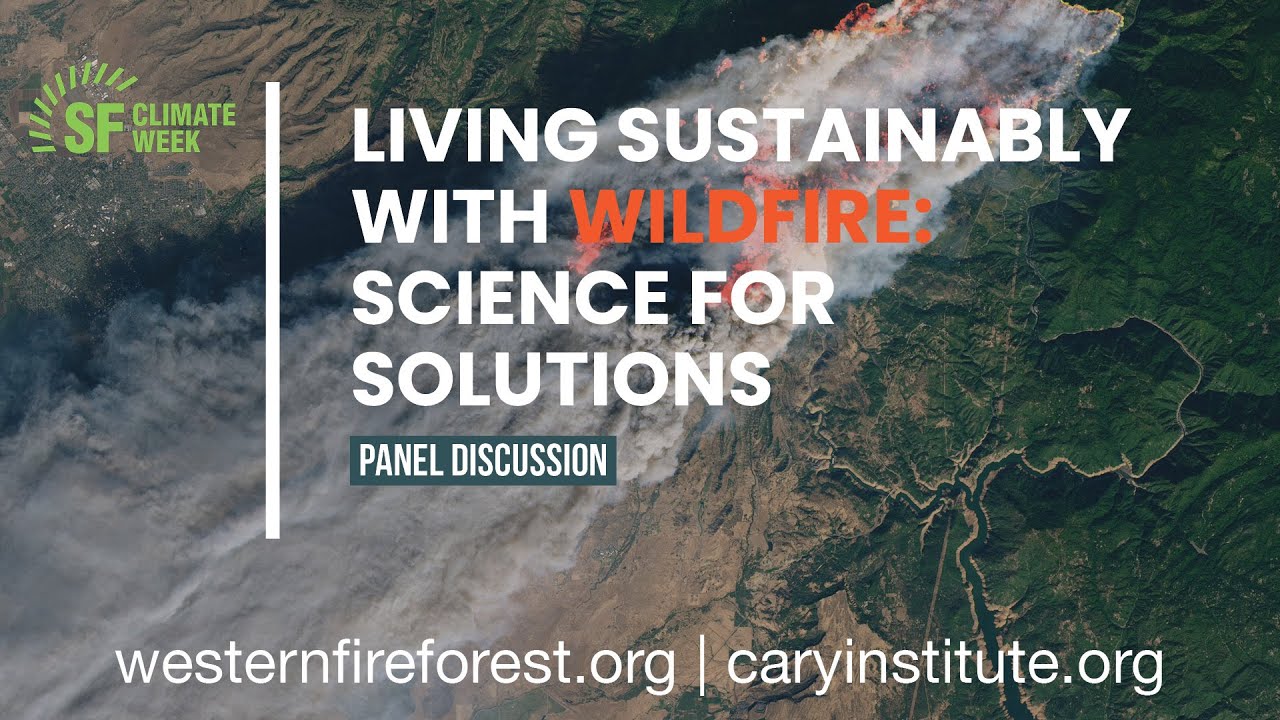
Living Sustainably with Wildfire
WFFRC News.
I am thrilled to be collaborating with this diverse and motivated group of scientists in service of a shared objective. These landscapes are changing, and understanding the pace and intensity of that change is an essential part of adapting our stewardship approaches.
bottom of page


